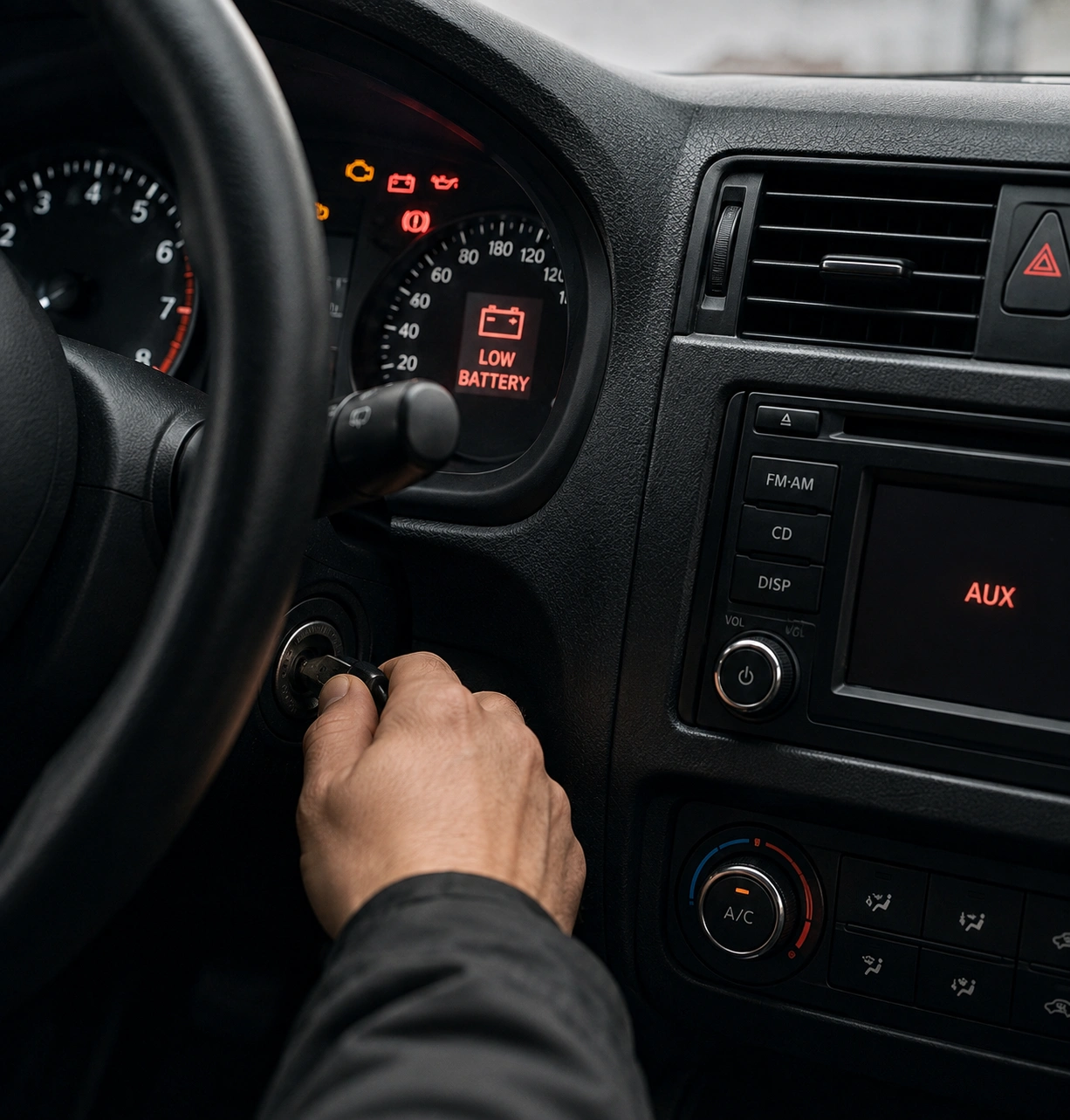
You turn the key or press the start button, but instead of starting immediately, your car hesitates. Maybe the engine cranks more slowly than usual. Maybe you hear clicking. Or perhaps the engine turns over normally but takes several seconds before it finally starts.
When your car starts taking longer to start, something has changed. A weak battery is one of the most common possibilities, but the battery isn’t always responsible. Problems with the starter, alternator, electrical system, fuel delivery, ignition system, or other engine components can produce similar symptoms.
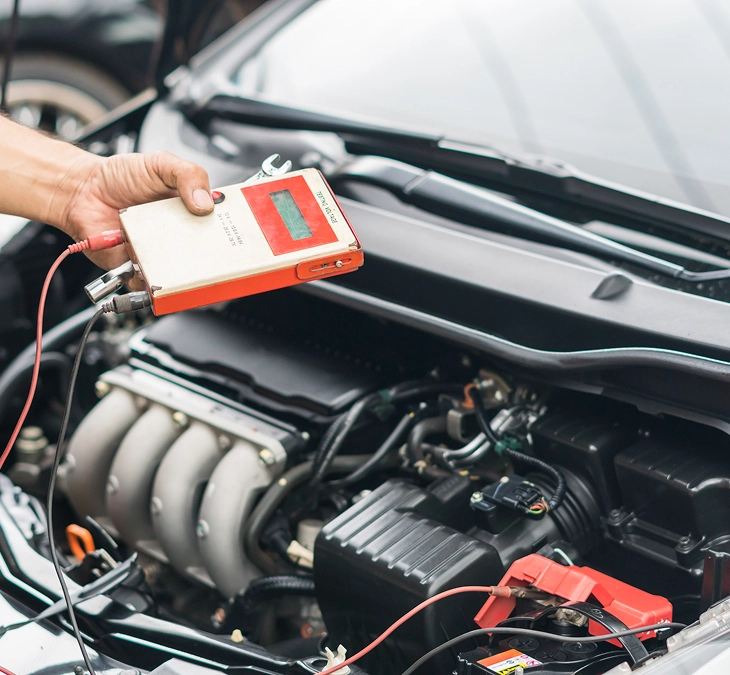
The way your vehicle behaves when you try to start it can provide important clues. At Ferber’s Tire & Auto Service, our ASE-certified technicians can test the starting and charging systems and perform professional diagnostics to determine why your vehicle is struggling to start.
Why Is My Car Suddenly Taking Longer to Start?
Before replacing the battery or starter based on symptoms alone, pay attention to exactly what happens when you attempt to start the vehicle. Different starting problems often produce different sounds and behaviors.
Is It the Battery, Starter, or Alternator?
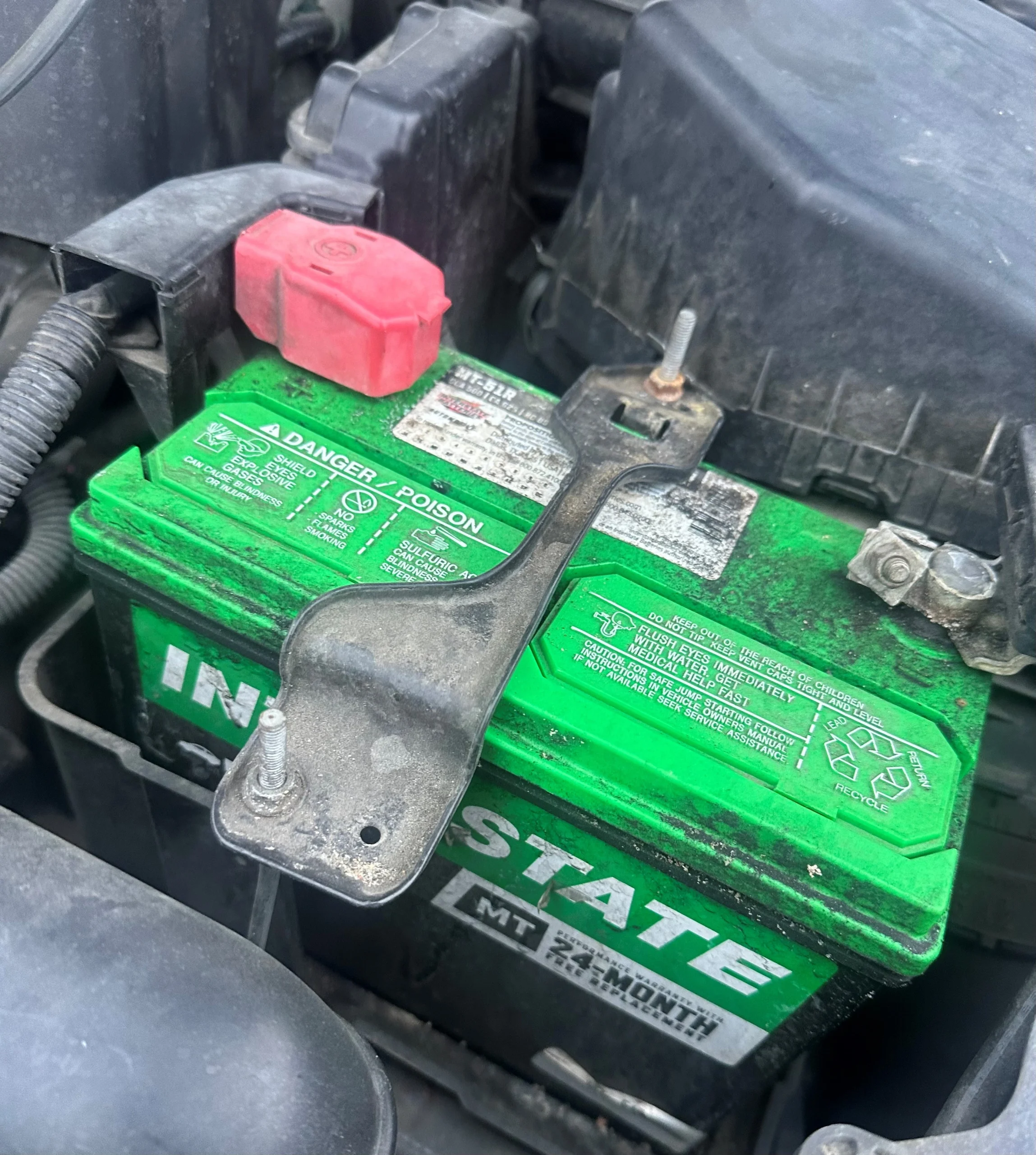
A weak or failing battery is often the first suspect when a car begins cranking slowly. Your battery supplies the electrical power needed to operate the starter motor and turn the engine over.
You may notice the engine cranks sluggishly, interior or dashboard lights dim while starting, or the vehicle needs a jump-start. Cooler fall and winter temperatures can also expose a battery that was already weakening after Virginia’s summer heat.
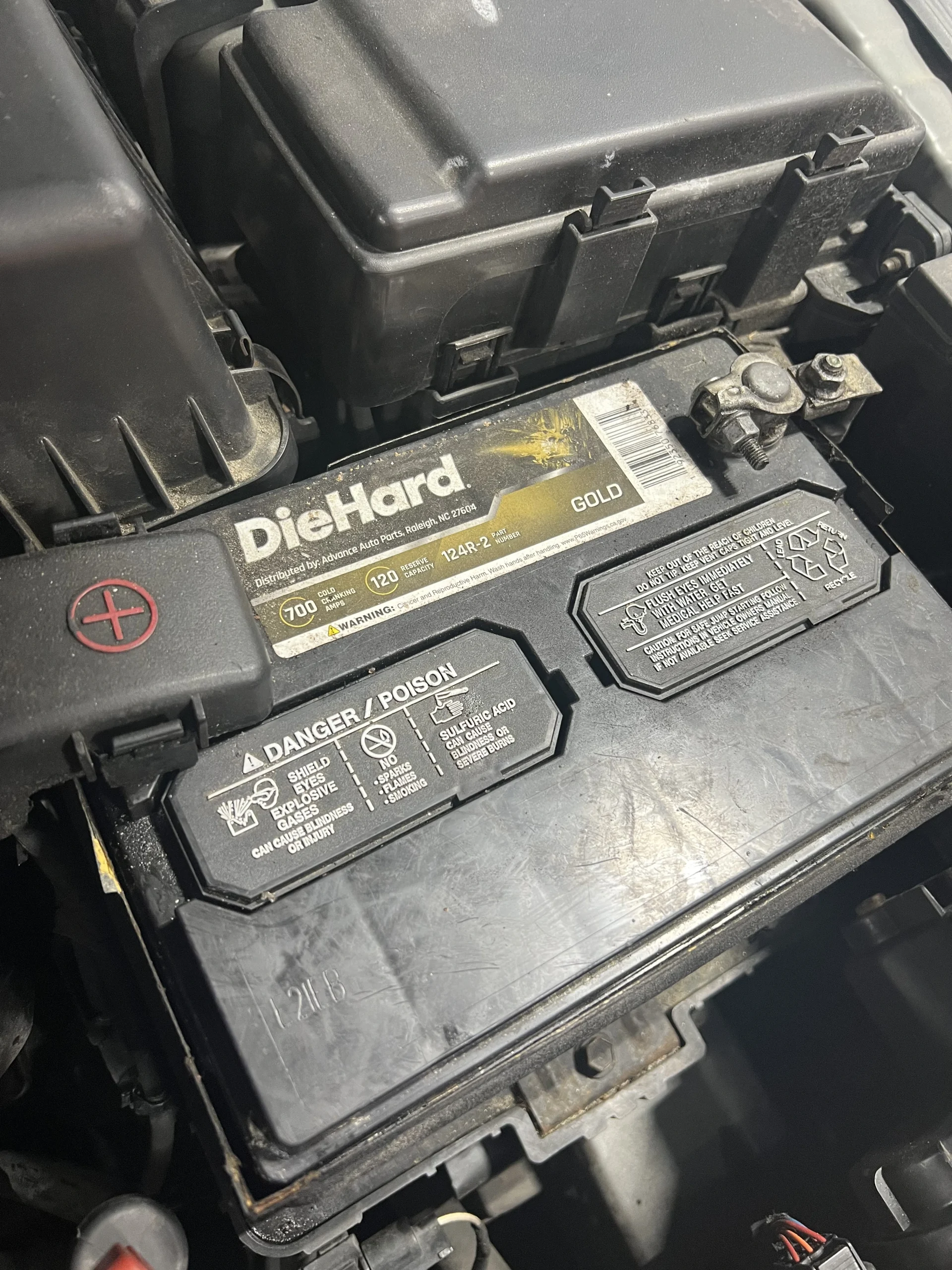
Battery age matters, but age alone can’t confirm the problem. Testing the battery’s condition and charging system is a better way to determine whether replacement is necessary. If testing confirms the battery has reached the end of its service life, Ferber’s provides professional car battery replacement.
The starter is responsible for physically turning the engine when you start the vehicle. A failing starter may produce a single click, repeated clicking, grinding, intermittent starting, or no cranking at all.
Starter symptoms can overlap with battery problems. A weak battery may not provide enough power to operate a perfectly good starter, while a damaged starter may struggle even when the battery is fully charged. Testing helps separate the two.
Then there’s the alternator.
The alternator generates electricity while the engine is running and helps recharge the battery. If it isn’t charging properly, the battery may gradually lose power. You might jump-start the vehicle successfully only to discover that it won’t start again later.
Alternator problems can also cause dim or flickering lights, electrical accessories that behave unusually, warning lights, or a battery that repeatedly goes dead.
Ferber’s offers auto electrical repair to diagnose problems involving batteries, alternators, starters, wiring, fuses, charging systems, and other electrical components.
What If the Engine Cranks Normally but Takes Longer to Start?
Here’s an important distinction: slow cranking and extended cranking aren’t necessarily the same problem.
If the engine physically turns over more slowly than normal, the battery, electrical connections, or starter system may be involved.
But if the engine turns over at its normal speed and simply takes longer to fire up, the problem may be related to fuel delivery, ignition, air intake, sensors, or engine management.
For example, worn spark plugs or ignition components can make combustion more difficult. A fuel-delivery problem may prevent the engine from receiving the correct amount of fuel immediately. Certain sensor problems can also provide incorrect information to the engine computer, affecting the air-fuel mixture during startup.
You may notice other symptoms such as rough idling, hesitation, reduced fuel economy, loss of power, a check-engine light, or difficulty starting after the vehicle has been sitting.
This is where professional computer diagnostics can be especially valuable. Modern vehicles rely on interconnected computers, sensors, electrical circuits, and mechanical systems. Diagnostic testing helps technicians identify the actual source of a starting problem instead of simply replacing parts based on a guess.
Could Something Else Cause Hard Starting?
Yes. Corroded or loose battery terminals can restrict electrical current even when the battery itself is still usable. Wiring problems, damaged grounds, blown fuses, ignition-switch issues, or parasitic electrical draws can also interfere with starting.
Maintenance-related problems are another possibility.
Worn spark plugs, overdue filters, deteriorated ignition components, or other neglected service items can contribute to difficult starting and poor engine performance. Following your vehicle’s recommended factory-scheduled maintenance can help address many of these components at the appropriate mileage intervals.
Starting behavior can also change depending on circumstances. Tell your technician if the vehicle only struggles to start when the engine is cold, after it has warmed up, after sitting overnight, following a short trip, or during damp or cold weather. Those details can help narrow down the cause.
When Should You Have a Slow-Starting Car Checked?
A vehicle that takes slightly longer to start once isn’t necessarily headed for a breakdown. But if you’ve noticed a consistent change in starting behavior, it’s worth investigating before the vehicle stops starting altogether.
Pay particular attention if the engine is cranking progressively slower, you’ve needed a jump-start, you hear clicking or grinding, lights dim significantly during startup, a battery or charging-system warning appears, or the car sometimes refuses to start.
Don’t assume that replacing the battery will automatically solve the problem. If the alternator isn’t charging correctly, a new battery can eventually discharge too. Likewise, replacing a starter won’t solve a weak battery, poor electrical connection, or fuel-delivery problem.
The better approach is to test the complete starting and charging system and diagnose any additional symptoms.
Seasonal temperature changes make this particularly relevant during fall. Cooler weather requires a battery to work harder to start the engine, so a battery or electrical problem that wasn’t obvious during summer may become noticeable as Virginia temperatures begin dropping.
If your car is taking longer to start, Ferber’s Tire & Auto Service can help determine whether the problem is the battery, starter, alternator, electrical system, or something else.
We have several convenient locations across Central Virginia. Call, or visit any of our shops to schedule an inspection. If you’re in Ashland, call 804-550-2886, or find us at 106 Junction Drive Ashland, VA 23005. You can reach our second Ashland store by calling (804) 550-3535, or stop in at 10383 Leadbetter Road Ashland, VA 23005. If you are in the Fredericksburg area, call us at (540) 898-8324, or visit us at 9407 Onyx Court Fredericksburg, VA 22407. And if you are in Midlothian, we have two locations there to serve you. Call (804) 665-9500, or visit 11201 Midlothian Turnpike, Richmond, VA 23235. Our visit our newest shop location at 13937 Hull Street Rd N, Midlothian, VA 23112, or call to book your appointment at (804) 601-1110.
Catching a slow-starting problem early can help you avoid the much less convenient situation of turning the key—or pressing the start button—and getting no response at all.