Fall in Virginia means cooler mornings, changing leaves, shorter days, and the beginning of another busy season of driving. Whether you’re commuting around Richmond, traveling I-95, heading to a football game, or preparing for holiday road trips, early fall is a smart time to make sure your vehicle is ready for the months ahead.
Virginia summers can be tough on vehicles. High temperatures can affect batteries, tires, fluids, belts, hoses, and other components. Problems that aren’t noticeable during warm weather may become much more obvious when temperatures begin dropping. That’s why fall vehicle maintenance isn’t only about preparing for winter. It’s an opportunity to address wear from summer and catch developing problems before colder weather arrives.
At Ferber’s Tire & Auto Service, our ASE-certified technicians provide factory-scheduled and preventative maintenance for drivers throughout Central Virginia. Here’s what should be on your fall car maintenance checklist.
What Should You Check on Your Car Before Fall?
You don’t necessarily need a separate service for every item on this list. Many of these components can be evaluated during a comprehensive maintenance visit based on your vehicle’s mileage, condition, and manufacturer recommendations.
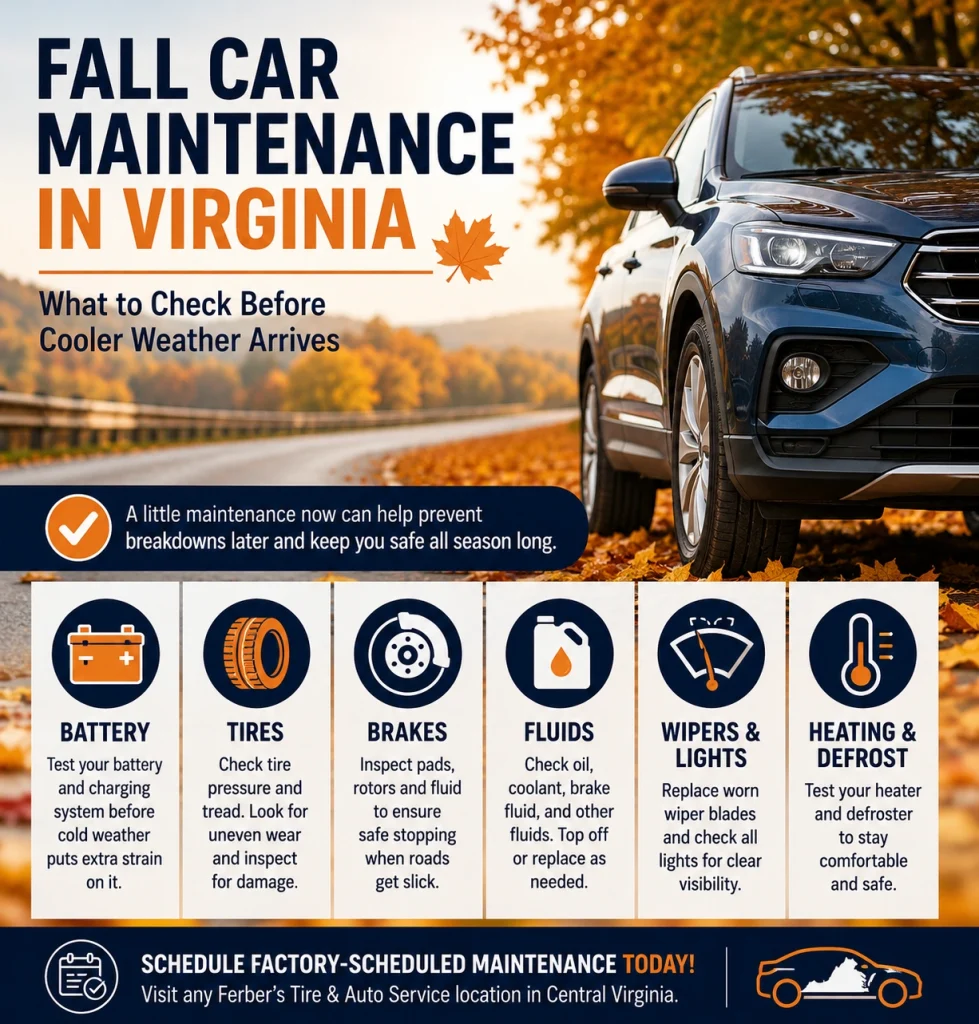
Test Your Battery and Inspect Belts, Hoses, and Fluids
Start with the battery. Summer heat can contribute to battery deterioration, while cooler temperatures can make a weakened battery’s condition more apparent. A battery that seemed fine in August may struggle to start your engine on a cold November morning.
If your battery is several years old, the engine cranks slowly, you’ve needed a jump-start, or you’ve noticed electrical issues, have the battery and charging system tested before cooler weather arrives.
Next, take a look under the hood.
Belts and hoses deal with significant heat throughout the summer. A worn serpentine belt may crack, fray, or begin slipping, while deteriorated cooling-system hoses can eventually develop leaks. Since a failed belt or hose can quickly turn into a roadside breakdown, early fall is a good time to inspect their condition.
Your vehicle’s fluids deserve attention as well. Depending on your mileage and manufacturer’s recommendations, technicians may inspect:
- Engine oil
- Coolant
- Brake fluid
- Transmission fluid
- Power steering fluid, when applicable
- Windshield washer fluid
Coolant is especially important as temperatures change. Your vehicle’s cooling system doesn’t only protect the engine from overheating during summer; properly maintained coolant also provides protection during colder temperatures.
If your vehicle is approaching a scheduled service interval, fall is an excellent time to complete factory-scheduled maintenance rather than waiting until holiday travel begins.
Check Your Tires, Alignment, and Suspension
Your tires are your vehicle’s connection to the road, making their condition especially important as Virginia moves into a season of fallen leaves, rain, colder pavement, and eventually the possibility of ice or snow.
Check your tire pressure regularly. Cooler temperatures can cause tire pressure to decrease, which means a tire that was correctly inflated during summer may become underinflated as fall progresses.
Also inspect tread depth and look for cracking, bulges, punctures, or uneven wear.
Uneven tire wear can indicate more than a tire problem. It may be a sign that your vehicle needs a wheel alignment or has worn steering or suspension components.
Virginia roads, potholes, curbs, and everyday driving can gradually change wheel alignment. Common signs include a vehicle that pulls to one side, an off-center steering wheel, or tires wearing more quickly on one edge.
Your suspension should also be inspected if you’ve noticed clunking over bumps, excessive bouncing, loose steering, or changes in handling. Ferber’s provides professional suspension repair for shocks, struts, ball joints, control arms, sway bar links, bushings, and related components.
Taking care of tire, alignment, or suspension issues before late fall can improve vehicle control as road conditions become less predictable.
Inspect Your Brakes, Wipers, Lights, and Heating System
Fall is also a good time to make sure the systems you rely on for visibility and safety are working properly.
Start with your brakes. Months of summer road trips, highway traffic, and stop-and-go driving may have added significant wear to brake pads and other components.
If you’ve noticed squeaking, grinding, vibration, pulling while braking, a soft brake pedal, or longer stopping distances, schedule a brake inspection. Even without obvious symptoms, inspecting brake pads, rotors, calipers, hoses, and brake fluid can help identify developing problems before holiday travel.
Next, check your windshield wipers. Virginia’s summer sun can dry and deteriorate wiper blades. If they leave streaks, skip across the windshield, or fail to clear water effectively, replace them before fall rain and winter weather arrive.
Don’t forget your lights. Shorter fall days mean you’ll spend more time driving after sunset. Check headlights, brake lights, turn signals, taillights, and hazard lights so other drivers can see you clearly.
Your defroster and climate-control system also deserve a test before you actually need them. Make sure the windshield defroster clears fog effectively and that the heating system produces warm air.
Why Fall Is a Good Time for Factory-Scheduled Maintenance
Your vehicle’s manufacturer already provides a roadmap for much of the maintenance your car needs. Factory-scheduled maintenance is based on mileage, time, vehicle design, and sometimes driving conditions.
Depending on your vehicle and mileage, scheduled maintenance can include an oil and filter change, tire rotation, brake inspection, battery testing, fluid services, filter replacement, spark plugs, cooling-system inspection, transmission service, belts and hoses, and steering and suspension evaluations.
Following these recommendations can help reduce wear and identify problems before they become unexpected breakdowns.
Fall is particularly convenient because it sits between two demanding driving seasons. Summer heat and vacation travel are ending, while Thanksgiving, Christmas, winter weather, and longer holiday drives are approaching.
It’s also worth checking your Virginia State Inspection sticker while you’re thinking about vehicle maintenance. Virginia requires most registered passenger vehicles to receive an annual safety inspection. Ferber’s locations are authorized Virginia State Inspection stations, making it convenient to stay ahead of an approaching expiration date.
The goal isn’t to replace components simply because the season changed. It’s to evaluate your vehicle’s actual condition and follow the maintenance schedule established for your specific make, model, mileage, and driving habits.
A fall inspection may reveal that everything is in excellent condition. Or it may identify a weak battery, worn wiper blades, low tire pressure, deteriorated belt, fluid leak, worn brakes, or another issue that’s easier to address now than during a cold morning or holiday trip.
If your vehicle is due for maintenance, schedule a visit with Ferber’s Tire & Auto Service at any of our central Virginia locations. In Ashland, visit us at 106 Junction Drive Ashland, VA 23005, or at 10383 Leadbetter Road Ashland, VA 23005. In Fredericksburg, we are conveniently located at 9407 Onyx Court Fredericksburg, VA 22407. And we have two locations in Midlothian at 11201 Midlothian Turnpike, Richmond, VA 23235, and at 13937 Hull Street Rd N, Midlothian, VA 23112. Stop by or call any of these shops to schedule an appointment. In Ashland, call either 804-550-2886, or (804) 550-3535. In Fredericksburg, call (540) 898-8324, and in Midlothian call either (804) 665-9500, or (804) 601-1110.
Our ASE-certified technicians provide factory-scheduled maintenance for domestic, Asian, and European vehicles throughout Central Virginia. We’ll help you determine what your vehicle needs based on its mileage, manufacturer recommendations, and current condition.
Taking care of a few maintenance items now can help your vehicle transition from Virginia’s summer heat into cooler fall weather—and keep you prepared for everything the road brings this winter.