
Auto Electrical Repair
Electrical Repairs for Your Vehicle in Central Virginia
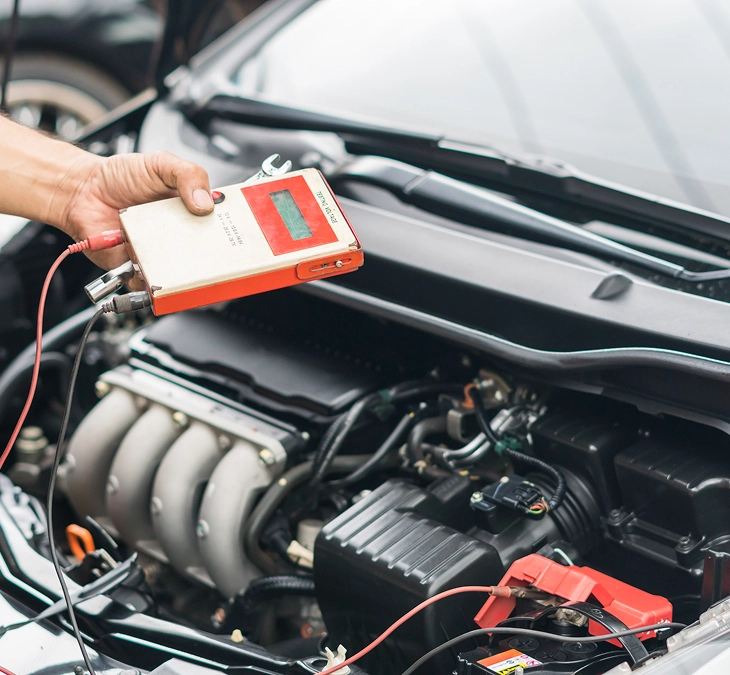
Expert Diagnosis for Modern Vehicle Problems
Modern vehicles rely on complex electrical systems for far more than starting the engine and turning on the headlights. Your battery, alternator, starter, sensors, onboard computers, power accessories, lighting, climate controls, and many safety features all depend on a properly functioning electrical system.
When something goes wrong, the symptoms aren’t always straightforward. A vehicle that won’t start could have a weak battery, failing starter, alternator problem, damaged connection, or another electrical issue. A dashboard warning light could indicate anything from a faulty sensor to a problem within another vehicle system.
At Ferber’s Tire & Auto Service, our technicians use professional diagnostic equipment to identify electrical problems and determine the appropriate repair. If you’re experiencing starting problems, warning lights, malfunctioning accessories, or another electrical concern, contact any of our central Virginia shop locations. In Ashland call either 804-550-2886, or (804) 550-3535. In Fredericksburg, call (540) 898-8324. And if you’re in Midlothian, call (804) 665-9500, or (804) 601-1110.
What Does Your Vehicle’s Electrical System Control?
A vehicle’s electrical system is really a network of interconnected systems. The battery provides stored electrical power, the starter uses that power to crank the engine, and the alternator generates electricity once the engine is running while recharging the battery.
Beyond the starting and charging system, modern vehicles contain numerous electronic control modules, sensors, wiring circuits, relays, and fuses. These components help operate everything from exterior lighting and power windows to engine management, infotainment, safety systems, and climate controls.
Because so many systems are interconnected, accurate diagnosis is especially important. Replacing a component based only on a symptom can result in unnecessary repairs without fixing the underlying problem.
Signs Your Vehicle May Have an Electrical Problem
Electrical problems can appear in many different ways. Sometimes the symptoms are obvious, such as a vehicle that won’t start. Other problems can be intermittent and only occur under certain conditions.
Slow cranking, clicking when you try to start the vehicle, flickering or dim headlights, repeatedly blown fuses, malfunctioning power windows or locks, dashboard warning lights, and accessories that work intermittently can all indicate an electrical concern.
You may also notice a burning smell, unusual battery corrosion, or electronics that behave unpredictably. If several electrical systems begin acting strangely at the same time, testing the battery and charging system is often an important first step.
Our Certified Auto & Body Repair Services
Battery, Starter or Alternator?
These three components work closely together, which is why their symptoms are frequently confused.
The battery supplies the electrical energy needed to start your vehicle. The starter uses that energy to crank the engine. Once the engine is running, the alternator supplies electrical power and replenishes the battery.
A weak battery may cause slow cranking or require frequent jump-starts. A failing starter may produce clicking or prevent the engine from cranking even when the battery is adequately charged. Alternator problems can cause the battery to repeatedly lose its charge or lead to electrical problems while driving.
Instead of guessing which component has failed, testing the complete starting and charging system can identify the actual source of the problem. If testing shows that the battery itself has reached the end of its service life, professional car battery replacement can restore dependable starting performance.
Auto Electrical Diagnostics
Electrical diagnosis involves more than connecting a scan tool and reading a trouble code. Diagnostic trouble codes can provide useful information about where a problem has been detected, but they don’t necessarily identify the component that should be replaced.
Technicians may need to test battery voltage, charging output, electrical connections, wiring integrity, grounds, fuses, relays, sensors, or individual circuits to isolate the problem.
Modern computerized diagnostic equipment can also communicate with the vehicle’s electronic control modules to identify faults and evaluate system operation. When an electrical issue is accompanied by an illuminated check engine light, additional check engine light diagnostics may help determine whether the problem involves the engine management or emissions system
Common Electrical Problems
Once the source of the problem has been identified, the repair depends on the affected system. Ferber’s Tire & Auto Service provides electrical system diagnostics and repair as well as alternator and starter replacement, lighting repairs, wiring and connection repairs, and service for power-operated accessories.
Electrical problems involving windows, locks, wipers, lights, switches, motors, and other accessories can often be traced to a failed component or circuit. In other situations, a seemingly electrical symptom may originate elsewhere in the vehicle.
That overlap is one reason a complete diagnosis matters. For example, a starting problem may ultimately require engine repair rather than an electrical component replacement.
Why Does My Car Keep Draining the Battery?
If a battery repeatedly goes dead, replacing it may not solve the problem.
The alternator may not be charging properly, an electrical connection could be loose or corroded, or an electrical component may continue drawing power after the vehicle is turned off. This type of unwanted electrical draw is often referred to as a parasitic drain.
A professional electrical diagnosis can measure battery draw and isolate the affected circuit. Finding the cause is important because repeatedly allowing a battery to become deeply discharged can shorten its service life.
Can Electrical Problems Cause Dashboard Warning Lights?
Yes. Modern vehicles rely on sensors and control modules that continuously communicate with one another. Voltage problems, faulty sensors, damaged wiring, poor connections, or component failures can sometimes trigger dashboard warnings.
However, a warning light shouldn’t automatically be assumed to be an electrical problem. The light indicates that the vehicle has detected a fault somewhere within the monitored system.
For example, a check engine light may be related to an engine, emissions, ignition, fuel, sensor, or electrical concern. Professional check engine light diagnostics can help identify what triggered the warning before repairs are recommended.
Can Routine Maintenance Prevent Electrical Problems?
Not every electrical failure can be prevented, but regular vehicle inspections can identify some developing problems before they leave you stranded.
Battery testing can reveal declining capacity, while inspections may uncover corrosion, damaged connections, deteriorated belts, or other concerns affecting the charging system. This is particularly useful as a battery ages or before seasonal temperature changes place additional demands on the starting system.
Including battery and electrical system inspections with factory scheduled maintenance can help catch developing issues while they are still manageable.
Why Professional Electrical Diagnosis Matters
Electrical systems have become increasingly sophisticated as vehicles have added more technology. A modern vehicle can contain dozens of computers and hundreds of electrical circuits, meaning symptoms that appear simple can sometimes have complicated causes.
Professional diagnosis helps separate the symptom from the actual failure. Instead of replacing parts until the problem disappears, technicians can test the system, identify the affected circuit or component, and make a more targeted repair.
Ferber’s Tire & Auto Service provides auto electrical diagnostics and repair for domestic, Asian, and European vehicles using modern diagnostic technology and experienced technicians.
If you’ve noticed a coolant leak, rising temperature gauge, overheating, or another cooling system concern, schedule service at either of our Ashland facilities, located at 106 Junction Drive Ashland, VA 23005, or 10383 Leadbetter Road Ashland, VA 23005. We also have a shop in Fredericksburg at 9407 Onyx Court Fredericksburg, VA 22407, and two more in Midlothian at 11201 Midlothian Turnpike, Richmond, VA 23235, and 13937 Hull Street Rd N, Midlothian, VA 23112.
Addressing the problem early can help protect your engine, prevent unexpected breakdowns, and keep your vehicle reliable for the road ahead.
Schedule Auto Electrical Repair
Electrical problems rarely become more convenient with time. A slow-starting vehicle can eventually become a no-start, an intermittent connection can become a complete failure, and an unresolved charging problem can leave you with a dead battery.
If your vehicle is difficult to start, displaying warning lights, experiencing electrical problems, or repeatedly losing battery power, have the system professionally tested before replacing parts unnecessarily.
Schedule auto electrical repair with Ferber’s Tire & Auto Service. With shop locations throughout central Virginia, including two in Ashland at 106 Junction Drive Ashland, VA 23005, and 10383 Leadbetter Road Ashland, VA 23005, one in Fredericksburg at 9407 Onyx Court Fredericksburg, VA 22407, and two in Midlothian at 11201 Midlothian Turnpike, Richmond, VA 23235, and 13937 Hull Street Rd N, Midlothian, VA 23112, our team is here to identify the source of the problem. We will help determine the appropriate repair to get your vehicle’s electrical system working properly again.
Frequently Asked Questions
Common signs include slow starting, clicking when trying to start the vehicle, dim or flickering headlights, frequently blown fuses, dashboard warning lights, malfunctioning power windows or locks, and electrical accessories that work intermittently.
These components can produce similar symptoms. A weak battery may cause slow cranking or frequent jump-starts, a failing starter may click or fail to crank the engine, and a failing alternator may allow the battery to repeatedly lose its charge. Testing the complete starting and charging system is the best way to identify the source of the problem.
A battery may repeatedly lose its charge because of an aging battery, failing alternator, loose or corroded electrical connection, or a parasitic electrical drain that continues drawing power after the vehicle is turned off.
Yes. Voltage problems, faulty sensors, damaged wiring, poor electrical connections, and component failures can trigger dashboard warning lights. However, warning lights can have many causes, so professional diagnostics are recommended before replacing parts.
Depending on the symptoms, technicians may test battery voltage, alternator output, the starter, wiring, grounds, fuses, relays, sensors, electrical connections, and individual circuits. Diagnostic equipment may also be used to communicate with the vehicle’s electronic control modules.
A malfunctioning alternator can prevent the battery from charging properly or expose it to improper charging conditions. Repeatedly allowing a battery to become discharged can shorten its service life, which is why the battery and charging system are often tested together.
Not necessarily. A no-start condition can be caused by the battery, starter, alternator, electrical connections, wiring, or another vehicle problem. Testing the starting and charging system can determine whether battery replacement is actually necessary.
Yes. Ferber’s Tire & Auto Service provides auto electrical diagnostics and repair for problems including starting and charging concerns, warning lights, wiring and connection problems, lighting issues, and malfunctioning electrical accessories.