
It’s Deer Collision Season in Virginia: What to Do After Hitting a Deer
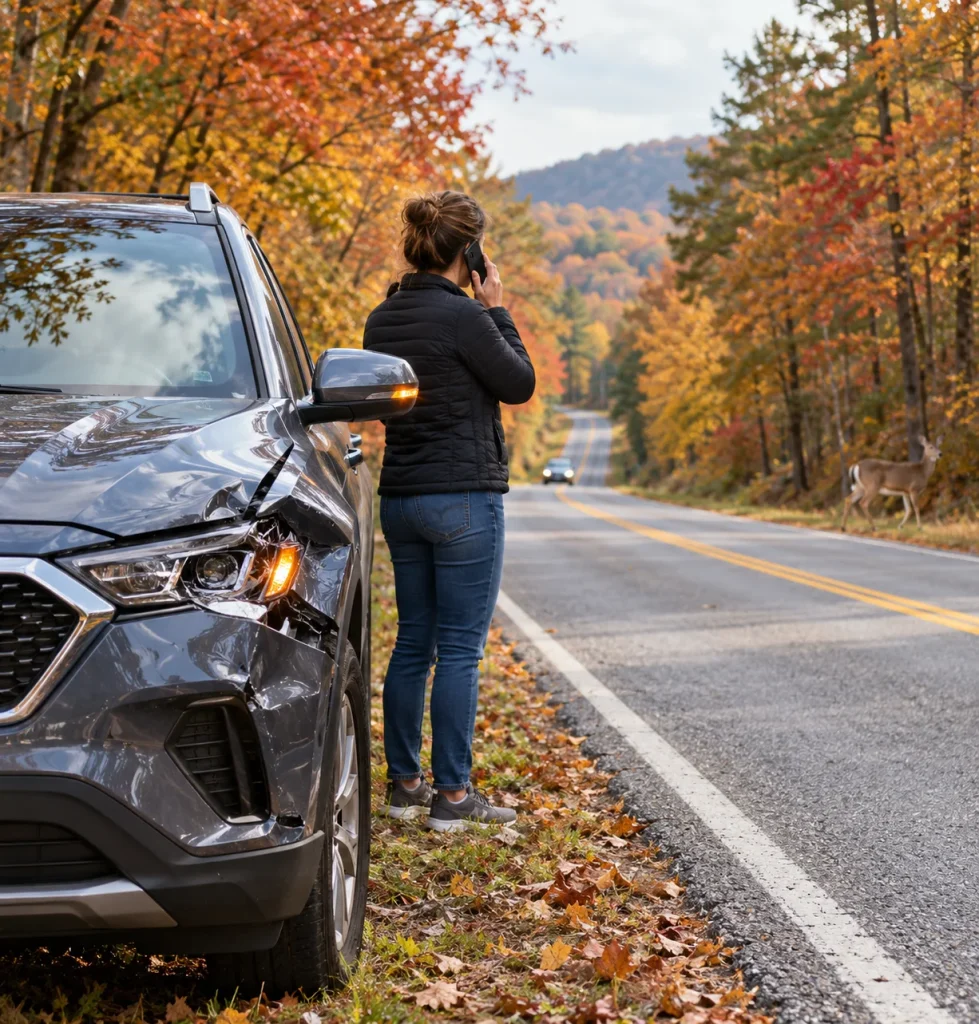
Fall in Virginia brings cooler weather, shorter days, changing leaves—and a sharp increase in deer activity. October through December are especially active months for deer, making encounters on roads around Ashland, Richmond, Midlothian, Hanover County, and surrounding Central Virginia communities more common.
A deer collision can happen in seconds, even when you are driving carefully. And while the damage may initially look like a broken headlight or dented hood, animal strikes can affect much more than the exterior of your vehicle. Radiators, air-conditioning condensers, sensors, cameras, suspension components, structural parts, and safety systems may all be located behind the visible body panels.
If you hit a deer this fall, knowing what to do next can help protect you, your passengers, and your vehicle.
What Should You Do Immediately After Hitting a Deer?
Get Yourself and Your Vehicle to a Safe Place
Your first priority after any collision is safety. If your vehicle can be moved safely, pull off the roadway and turn on your hazard lights. Avoid stopping in an active travel lane whenever possible.
Do not approach an injured deer. A frightened or injured animal can move suddenly and may cause additional injuries. Contact law enforcement if anyone is injured, the vehicle is blocking traffic, the deer is creating a roadway hazard, or the circumstances otherwise require assistance.
Once you are in a safe location, take a moment to inspect the vehicle before deciding whether it can be driven.
Look for leaking fluids, steam, broken headlights, damaged tires, hanging body panels, warning lights, or pieces rubbing against a wheel. If the temperature gauge rises, coolant is leaking, the steering feels abnormal, or the vehicle cannot be operated safely, arrange for towing rather than attempting to drive home.
Document the Collision and Visible Damage
If conditions allow, take photographs of your vehicle from several angles. Include close-up images of the damage along with wider photographs that show the entire affected area.
A deer strike can damage the hood, bumper, grille, headlights, fenders, windshield, mirrors, doors, or roof depending on the size of the animal and point of impact. Photos can be useful when discussing the damage with your insurance provider and collision repair facility.
After documenting the damage, contact your insurance company if you plan to file a claim. Ferber’s collision repair teams can inspect the vehicle and help determine the extent of the repairs needed.
Ashland-area drivers can contact Ferber’s body shop at [location 3], ([phone 3]), while Richmond and Midlothian drivers can visit Body Service Express at [location 6], ([phone 6]).
Why Deer Collision Damage Can Be More Serious Than It Looks
Hidden Damage Can Be Behind the Bumper
Modern bumpers are designed with multiple components beneath the painted exterior cover. An impact may affect bumper reinforcements, mounting points, absorbers, wiring, lighting, sensors, or nearby structural components even when exterior damage appears relatively small.
A front-end deer collision can also damage the radiator, condenser, cooling fans, hoses, or other parts of the engine cooling system. If you notice coolant underneath the car, steam, or increasing engine temperature after the collision, stop driving.
Ferber’s provides comprehensive collision repair in Ashland and collision repair in Richmond to identify both cosmetic and underlying accident damage.
Cameras and Safety Sensors May Need Attention
Today’s vehicles often include cameras, radar sensors, parking sensors, and other Advanced Driver Assistance System components around the windshield, grille, mirrors, and bumpers.
A collision can damage these systems directly or alter their position. Even when a sensor appears intact, repairs to the bumper, grille, windshield, or surrounding structure may affect how the system operates.
That is one reason professional collision evaluation is important after an animal strike. Restoring a vehicle involves more than making the exterior look right; damaged components and safety-related systems also need to be identified and addressed correctly.
Steering, Suspension and Alignment Can Also Be Affected
Sometimes a driver hits a deer and then strikes a curb, shoulder, ditch, or another object while attempting to stop or avoid the animal. That secondary impact can damage wheels, tires, steering components, or suspension parts.
If your vehicle pulls to one side, the steering wheel sits differently, you notice new vibration, or a tire appears damaged after the collision, ask for the steering and suspension to be inspected.
Ferber’s also offers wheel alignment and suspension repair when an accident affects components beyond the body itself.
Deer Collision Repair in Ashland and Richmond, VA
Drivers cannot prevent every deer collision, but extra caution can help during peak fall activity. Be especially attentive around dawn and dusk, reduce speed in areas where deer are common, and remember that deer frequently travel together. If one crosses the road, another may be nearby.
If a collision does happen, do not judge the vehicle only by what you can see from the outside.
Ferber’s Tire & Auto Service provides professional auto body and collision repair for Central Virginia drivers. Our Ashland body shop, located at 216 S. Washington Highway Ashland, VA 23005or call, (804) 798-4826, handles collision damage ranging from dents and paint repairs to structural work. Richmond-area drivers can turn to Body Service Express at 11227 Midlothian Tpke, Richmond, VA 23235, or call (804) 601-1101 for professional collision restoration near Midlothian.
Getting the vehicle inspected after a deer strike helps identify hidden damage and gives you a clearer picture of what is needed to safely restore your car, truck, or SUV.
FAQ’s About Deer Collision and Auto Body Repair
It depends on whether the collision is reported to an insurance company, law enforcement agency, repair facility, or another organization that supplies information to vehicle-history databases. A professional repair does not necessarily prevent an accident from appearing on a vehicle-history report.
Vehicle owners generally have the ability to choose their repair facility. Your insurer may have preferred or participating shops, but you can ask about your options and select a qualified collision repair facility you trust.
In most cases, hitting a deer falls under comprehensive coverage, not collision coverage. Coverage depends on your policy, deductible, and how the claim is filed. Document the damage with photos and contact your insurance company before scheduling collision repair in Ashland or collision repair in Richmond.
An impact can damage wiring, sensors, cooling-system components, air-intake parts, or other systems monitored by the vehicle’s computer. A warning light that appears after a collision should be diagnosed rather than simply cleared.
A vehicle is generally declared a total loss based on repair cost, vehicle value, applicable insurance guidelines, and state requirements—not solely because it is physically impossible to repair. Ferber’s Ashland location can evaluate certain totaled-car repair situations and determine what repair options may exist.