Automotive Repair Archives - Page 9 of 13 - Ferber's Tire & Auto Service

The transfer case has the task of splitting engine power to all four wheels through the front and rear axles. They’re found in all four-wheel and all-wheel-drive vehicles. Your engine powers the transmission which then moves that power to the transfer case. Transfer cases send power from the output shaft through chains, gears or hydraulics. That chain sends torque to the front and rear driveshafts, which then deliver power to the axles. There are several different types of configurations for all-wheel and four-wheel drive vehicles. Each configuration uses a different type of transfer case. So, what causes the transfer case to leak?

When it comes to the transfer case there could be a couple of issues behind a leak. The transfer case is a self-contained unit that has its own fluid. A leak could be from a bad seal or an issue locked within the case itself. The output shaft seal is the part of the transfer case that connects the case to the axle. Its job is to prevent fluid from leaking out of the transmission and to keep fluid from leaking out of the front and rear output shafts to the differential. These seals can dry up, wear out and break. Once this occurs, the fluid can no longer lubricate the parts within the transfer case. Without proper lubrication, the parts will wear out and overheat. If you have any issues or concerns about your transfer case, bring it to a trusted shop such as Ferber’s Tire and Auto for an inspection today!

WHY DOES MY TRANSFER CASE LEAK?

The transfer case has the task of splitting engine power to all four wheels through the front and rear axles. They’re found in all four-wheel and all-wheel-drive vehicles. Your engine powers the transmission which then moves that power to the transfer case. Transfer cases send power from the output shaft through chains, gears or hydraulics. Read More
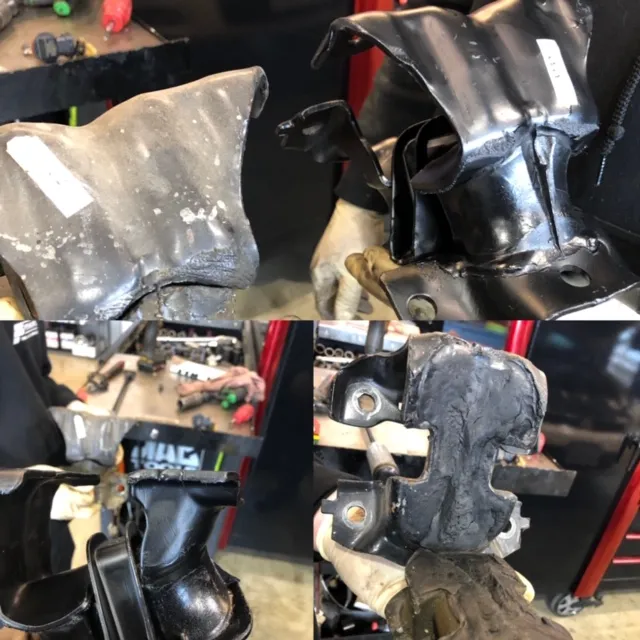
WHY DID MY ENGINE MOUNT BREAK?

Engine mounts, (also known as motor mounts) are used to support the engine while is supplies power to the wheels. They secure your car’s engine and transmission to the subframe. Engine mounts absorb shock and vibration to make sure the driver doesn’t feel any movement of the motor. Typically, they’re made from two attached pieces Read More

WHY DOES MY TORQUE CONVERTER SHUDDER?

The torque converter is what allows the engine to run in automatic vehicles while at a complete stop. It’s basically a hydraulic pump that ties together the engine and transmission. As automatic transmission cars don’t use a clutch to completely disengage, fluid coupling allows the engine to spin independently of the transmission. The torque converter Read More

WHY IS MY U-JOINT SQUEAKING?

Universal joints (also known as U-joints) are a vital connection between your vehicle’s driveshaft and axles. U-joints, allow driveshafts to move up and down along with the suspension while the shaft is moving so you can transmit power. They’re a pivot point that allows two shafts to rotate at the same speed no matter the Read More

SIGNS OF A FAILING WHEEL BEARING

The wheel bearing is a crucial part that allows the hub, tire and wheel assembly to work together. It allows for friction free movement of the hub assembly providing smooth wheel and tire rotation. The wheel bearings’ comprised of a set of steel balls held together by a metal ring. It rides on a metal Read More

IS THE TRANSMISSION FILTER REALLY THAT IMPORTANT?

The transmission of your vehicle does a lot of the heavy lifting to keep your vehicle moving. Heat and pressure over time can cause bits of metal and contaminants to flake off and do damage. This is where the transmission filter saves the day! For the cars that use them, the transmission filter is a Read More

DIRECT VS. INDIRECT TPMS

The Tire Pressure Monitoring System (TPMS) light came to be as a matter of safety. An underinflated tire is more likely to cause a blowout. The TREAD act passed by National Highway Safety Administration in 2007 was created to hold manufacturers accountable for recalls and designs of the TPMS. TPMS can be broken into major Read More

WHEN SHOULD I REPLACE MY TIMING BELT?

Your engine is a complex system filled with pulleys, belts, and much more. Of these parts, the timing belt may be the most important. The toothed timing belt ensures that the crankshaft and camshaft are rotating in harmony. The back and forth between the piston movement and valve opening inside your engine require extreme precision. Read More

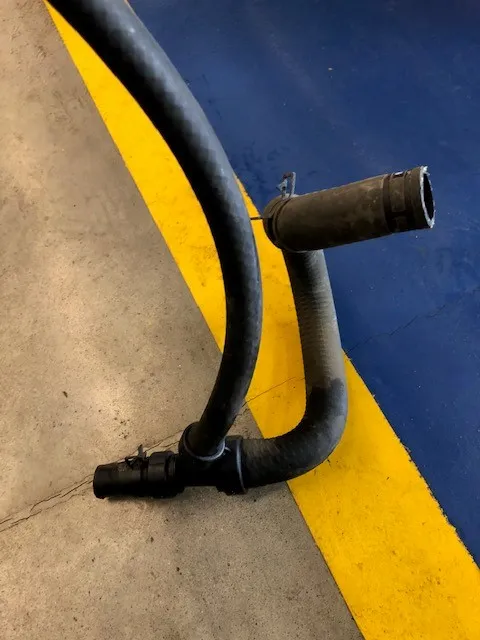
SIGNS OF A FAILING HEATER HOSE

The heater hose is a key component of your engine’s cooling system. The purpose of the hose is to move coolant from the engine to the heater core located in the dash of your vehicle. Made with rubber and built with resistance to heat and coolant chemicals, they’re pre-molded to fit each vehicle’s cooling system. Read More

WHY IS MY WHEEL CYLINDER LEAKING?

The wheel cylinder is a part of the brake drum assembly. Its job is to press the brake shoes against the brake drum. This creates the friction needed to slow your vehicle. Every time you press your brake pedal, the master brake cylinder transfers hydraulic pressure to the wheel cylinder through the brake fluid in Read More

1 … 7 8 9 10 11 … 13